Showing posts with label 1974. Show all posts

Monday, 21 October 2019

Sleaze Fiend Magazine Issue 3.5


The latest issue of Sleaze Fiend Magazine is here! This time around it's a combination of new material (100 pages worth) and a selection of the best bits from the now sold out 1st and 2nd issues. You can pick up a copy of SFM 3.5 as well as Issue #3 by visiting Weird World Publishing's online store HERE.


New bonus material for this issue includes: “XXX Drive-In: From The First To The Last”, an examination of the curious oddity that were open air drive-in movie theatres that specialised in showing adult movies (even curiouser is that there are still two that are operational, both in Texas)! There is also a look into G&A Books, a notorious adult book store that was a fixture of the 42nd Street of old, a review of Hard Ticket To Hawaii by yours truly, and “Archie's Satanic A Go-Go”, which is an article about a bizarre sideline in Archie comics between 1972 and 1975 that featured stories filled with gore, horror, and Satanism...

Click “READ MORE” below to continue...

Saturday, 20 February 2016

Rabid Dogs (Mario Bava, 1974) Blu-Ray/DVD Review

Find more exploitation reviews here.


“You're just crazy! Crazy and cruel!” Italy in the 1970s was a turbulent place and time, rocked by socio-political change and rife with organised crime. Drug cartels, kidnapping schemes, and young gangs left the police scrabbling to catch up and the public locking themselves away. Reacting to this period of fear, the film makers of the era unleashed a series of hard-as-nails crime pictures and hard-bitten 'poliziotteschi' films. Menacing rogue cops modelled on Dirty Harry dominated, but sometimes the violent criminals took centre stage. One example would be Umberto Lenzi's Almost Human (1974), but not to be outdone – even in the twilight of his career – Mario Bava (best known for horror films like Black Sunday or Kill Baby Kill) dived into the fray with Rabid Dogs. However, it was sucked into a nightmarish legal limbo before the low budget production had even finished. The film, which many feared to be lost forever, remained unseen for more than twenty years before, at long last, it was pulled from the ashes and given new life...


Click “READ MORE” below to continue the review and see more screenshots…

Monday, 25 January 2016

Texas Chainsaw: Mini Review...

What's it about?
A direct sequel to Tobe Hooper's legendary 1974 film The Texas Chainsaw Massacre in which, after Sally Hardesty's escape, the Sawyer family - including an extended rabble of misfits coming along for family support - are burned alive in their home. It's 1973 and there's only one survivor - a Sawyer family baby - who grows up forty years later to be in her early twenties. Seriously. Lack of respect for the audience's intelligence and the horror genre in general aside, young 'Heather' is surprised one day to learn that her grandmother - whom she never knew - has died and left her an inheritance in (where else) Newt, Texas - where all the chaos happened in 1973. She and her friends go to investigate - guess what happens next.
Who would I recognise in it?
Alexandra Daddario, Tania Raymonde, Gunnar Hansen, Bill Moseley, Marilyn Burns, Scott Eastwood, Richard Riehle.
Great/Good/Alright/Shite?
Written by Adam Marcus (the writer/director of the initially intriguing but ultimately lamentable Jason Goes To Hell), the film starts off strong - the attention to detail in re-staging the post-massacre location from the original film is impressive - with a non-Leatherface cameo from original chainsaw-wielder Gunnar Hansen, and Bill 'Chop Top' Moseley playing Jim Siedow's part as Sawyer patriarch Drayton. However, the strange tone of the film - in which the monsters are unconvincingly cast as victims to be sympathised with - becomes evident early on. Moving forward to the present day - from 1973 to 2013 - comes the film's major F-You to the viewers. It's not explicitly stated that it is present day - but the up-to-date hip-hop, vehicles, and (most blatantly of all) smart phones - makes the space-time continuum-breaking 2013 setting undeniable. As previously stated, but repeated for emphasis - the infant survivor of the 1973 lynching grows up FORTY YEARS LATER to be in her early 20s, in the shape of Alexandra Daddario (True Detective, Burying The Ex)...

Click "READ MORE" below to continue the review...

Sunday, 28 October 2012

Almost Human (Umberto Lenzi, 1974) DVD Review...

Read more Shameless Screen Entertainment DVD reviews here.


Umberto (Cannibal Ferox, Man From Deep River) Lenzi's brash poliziotteschi crime thriller kicks off in grand style, with a botched bank robbery that leads to a frenzied car chase filled with screaming rubber and battered metal – a sequence that best demonstrates Eugenio (The Good, The Bad, and The Ugly) Alabiso's tight editing. Blamed for ruining the score, Giulio Sacchi (Tomas Milian, Syndicate Sadists, full of twitchy energy) is introduced as an unreliable low-level hoodlum on Italy's crime-ridden streets, a man with enough chips on his shoulder to fill-out a fish supper. What's more, he's not above killing a policeman for a mere 600 lira stolen from a cigarette machine, in this film where the usual Italian glamour is replaced by uncompromising grit.


Written by Ernesto Gastaldi's (The Strange Vice of Mrs Wardh), we are presented with a vision of Italy exposed as a society ruled by a totally corrupt legal system which fails to enact the basic intentions of law and order. Criminals are routinely let off the hook due to a lack of evidence, and it is with this knowledge that Giulio crafts a scheme to yield him some fat cash: half a billion lira, to be precise.

Click "READ MORE" below for the full review and more screenshots...

Saturday, 21 January 2012

Night Train Murders (Aldo Lado, 1974)


Find more Shameless Screen Entertainment DVD reviews here. 

The following is the third of three reviews for the "Shameless Slasher Nasties Box Set" - it's a 3-disc DVD comprised of Killer Nun, Torso, and Night-Train Murders.


Like Killer Nun (included in this box set), Aldo Lado’s riff on Wes Craven’s The Last House on the Left (1972) found its way onto the Department of Public Prosecutions list of 72 banned video nasties in the 1980s. However, similarly to Berruti’s film, Night Train Murders was later acquitted (33 titles in total were acquitted, leaving 39 that were ‘liable to deprave and corrupt’ anyone who viewed them).


While the trailer seems to suggest a lurid and fast-paced thriller, Lado’s ‘rape and revenge’ flick is in fact much more reliant on suspense and slow-build tension – and a script loaded with brutal social commentary. Furthermore, despite Lado claiming to have never seen Craven’s vicious Vietnam-weary The Last House on the Left (itself heavily inspired by Ingmar Bergman’s 1959 film The Virgin Spring), there are numerous similarities between the two films – two girls fall victim to a gang of thugs (one of whom is a junkie) only for them to in-turn fall victim to the upper middle class parents of one of the victims (one of whom is a Doctor). That said, the two films differ in two key ways – Craven’s documentary-like film is far more directly plotted, while Lado’s visually luxuriant film possesses far more twisted characters.


Opening amidst the heavily populated consumer haven of a German shopping district on Christmas Eve, Lado’s social criticism gets off to an early start – the safety of this scene getting interrupted when the two antagonists (“Blackie” and “Curly”) mug a boozy Santa Claus. They escape the police by hopping aboard a departing train – the same train that is carrying Margaret and her friend Lisa on their way to spend the holidays in Italy – and so a night of depravity is set in motion.


Amongst the passengers are a cross-section of 1970s European society – including happy families, students, Catholic priests cheating at chess, and a group of well-heeled adults discussing the very nature of morality, democracy, and if there is a middle-ground between liberalism and totalitarianism. Indeed it is within this last group that we meet one of the key antagonists – ‘The Lady on the Train’ – an upper middle class woman who hides her sexual perversions in her handbag and behind her veil. It is with this character that the social criticism of the script is most potent, unleashing her inner demons via a toilet-bound tryst with Blackie – in this way depravity is almost treated like a sexually transmitted disease that brings out the worst in her suppressed character. It’s quite literally a clash of the high society and the seething proletariat.


As the film progresses, the social commentary continues to come thick-and-fast as the tension slowly builds – seemingly happy marriages are shown to be on the rocks, and the very nature of temptation and shame are embodied brilliantly in the figure of a bourgeois voyeur. Indeed, the film really explodes once we’ve swapped trains and the central protagonists and antagonists find themselves secreted away in a booth with each other – and it is here that Ennio Morricone’s score (central to which is a chilling, stalking harmonica) creates an almost unbearable amount of anxiety as events take a dramatic and violent turn for the worse.


Cast in a sinister and seductive blue light, Gabor Pogany’s cinematography expertly melds vice, violence, and virgin innocence, while Alberto Gallitti’s exceptional editing fizzes with inspired cross-cutting and sound design that blends two distinct worlds into a distillation of the troubled underbelly of (at the time at least) modern European life. While The Last House on the Left focussed more on up-front violence, Night Train Murders instead opts for chillingly lifting the veil on the potential moral squalor inside any one of us – and it is precisely this kind of rich thematic texturing that proves Lado’s film to be an extremely rewarding entry in the ‘rape and revenge’ sub-genre.

Shameless Screen Entertainment do themselves proud with a clean and crisp transfer, and a nice audio presentation that preserves all of the Godfather-like use of clattering train wheels on the soundtrack; trailers round out the package. The 3-disc 'Shameless Slasher Nasties Box Set' also comes with an essay insert from noted film writer Kim Newman (providing brief but informative context), and the set itself comes with impressive cover art that mimics a rental videotape (complete with "Be Kind and Rewind" sticker).

Saturday, 8 October 2011

What Have They Done To Your Daughters? (Massimo Dallamano, 1974): DVD Review...

Find more Shameless Screen Entertainment DVD reviews here.

This early 1970s poliziotteschi-cum-giallo has a bigger bark than bite - it appears to be more lurid, judging by the cover art (in Shameless' signature gaudy yellow), than it actually is. While Strip Nude For Your Killer (1975) was as sleazy as you'd expect, Daughters takes a different route and focuses much more on the police investigation aspect - that is oftentimes overshadowed by the easier to market themes of sex and violence.
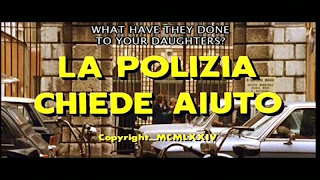

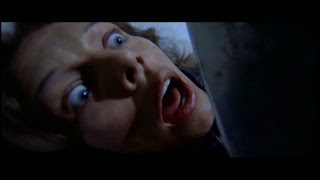
A rich school girl is discovered hanged in a loft apartment - a girl who is evidently no stranger to carnal activities - and so begins an investigation that leads to the discovery of a secretive, high-end prostitution ring that specialises for those seeking underage exploitation. There are times when the film appears to have quite serious pretensions of addressing a horrific fact of life, albeit in the vein of an occasionally gruesome murder mystery. Indeed, by the end of the film, the underlying cynicism of Ettore Sanzo and Massimo Dallamano's script really comes to the fore to point a finger at the grim realities of political corruption - how thousands of missing teenagers are simply ignored by the system.
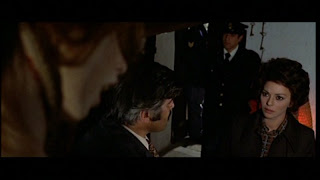

So while it might disappoint some of those seeking more exploitative fare, it does compensate in spades with a pretty strong police procedural story (relatively speaking, at least) mixed with elements of murder mystery and even action. A notable high point in the film is an impressive chase sequence that appears to throw caution to the wind in a somewhat guerrilla filmmaking style. The police chase a leather-clad, cleaver-wielding motorcyclist at high speed through the streets and - seemingly at least - genuinely catch unaware bystanders by surprise, which only adds to the thrilling riskiness of the chase.

Compared to Strip Nude For Your Killer, the direction and photography aren't quite as tight or quite as beautiful, but nevertheless Franco Delli Colli's cinematography provides a constant stream of impressive compositions, while Dallamano keeps the spotlight shining directly on the police investigation - indeed, considering some aspects of the plot, it makes an awful lot of sense to take the higher road. One stand-out contribution above them all, however, is Stelvio Cipriani's score - particularly "La Polizia Sta A Guardare" (as heard during the climactic chase sequence in Quentin Tarantino's Death Proof) - which adds a sense of propulsion that nicely compliments the procedural aspects of the plot.

Shameless Screen Entertainment's DVD makes for a solid presentation. The film looks about as good as you can hope for - this not being a 'big name giallo' like The Bird With The Crystal Plumage - yet the clean-but-still-grainy 2.35:1 print (in anamorphic widescreen) actually helps compound the grittier elements of the plot. A series of trailers for other releases, and a reversible sleeve round out the package.


For those with a penchant for 1970s giallo, this is definitely a worthy and intriguing entry in the genre. A mixture of mystery, horror, action, and thriller with a healthy dose of cynicism that makes for a strong and enjoyable viewing experience.